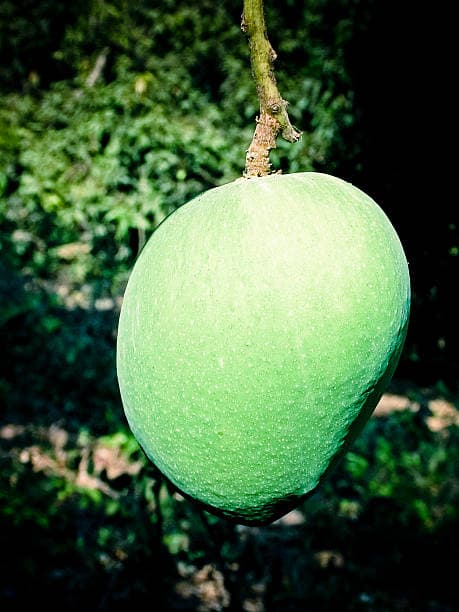
They call it the Honey Mango for a reason. The Sendura — also known as Sindhura, Senthoora, or Lalpari — is South India's sweetest secret: a small-to-medium fruit with a fiery vermilion-red blush and an intensely sweet, fiberless flesh that quite literally melts on the tongue. Its Sanskrit name 'Sindhura' means vermilion, describing the sacred red pigment on its skin. Grown across Karnataka and Tamil Nadu, this is the mango that converts skeptics into believers with a single bite.
01
1. Origin: Karnataka and Tamil Nadu
The Sendura mango is primarily cultivated in the southern districts of Karnataka (particularly Kolar, Tumkur, and Ramanagara) and Tamil Nadu (Salem, Krishnagiri, and Dharmapuri). The variety thrives in the hot, semi-arid climate of the Deccan plateau where the intense summer sun and well-drained red laterite soil create optimal conditions for sugar accumulation. The specific heat stress of these regions — regular summer temperatures exceeding 40°C — is what drives the Sendura's exceptional sweetness.
Acquire the Harvest
Direct from our Konkan Orchards
Naturally ripened with hay. GI-Certified. Zero carbide. Delivered in 48 hours.
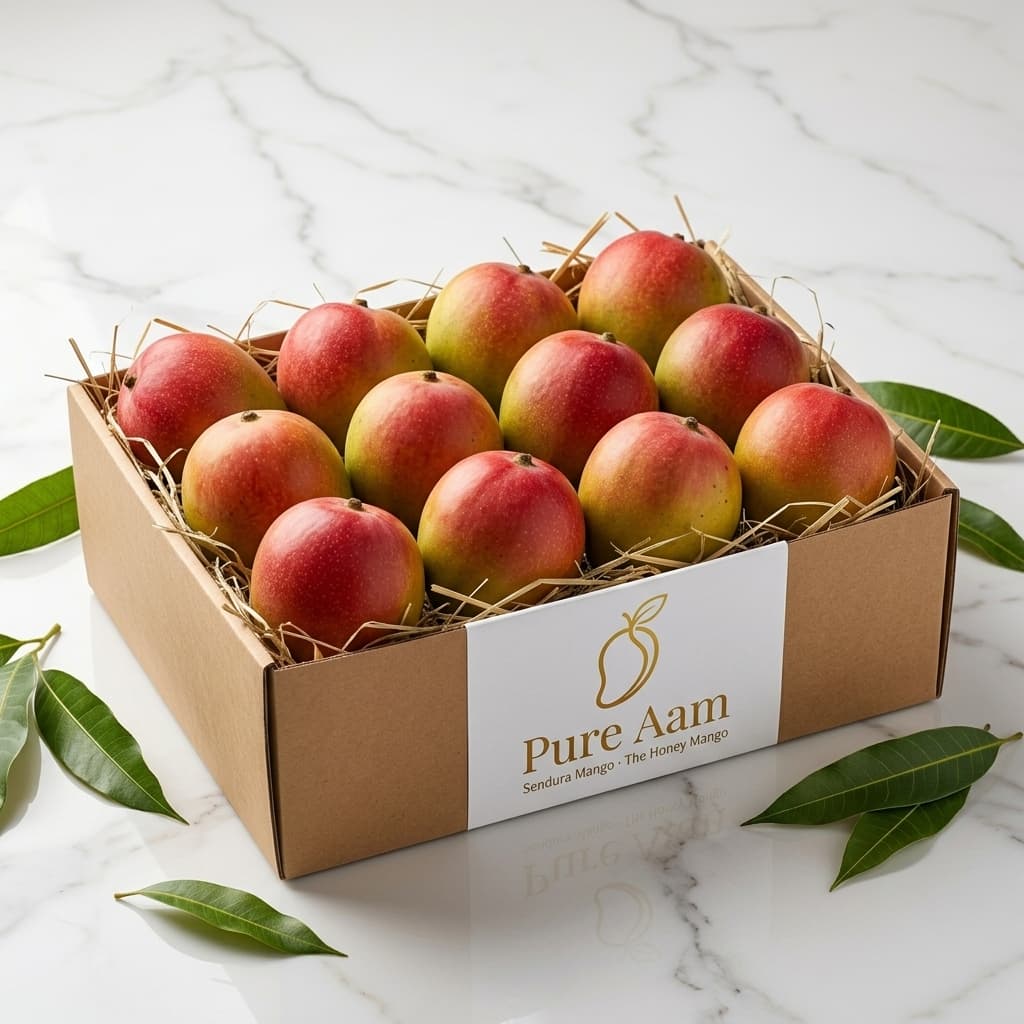 Farm Fresh
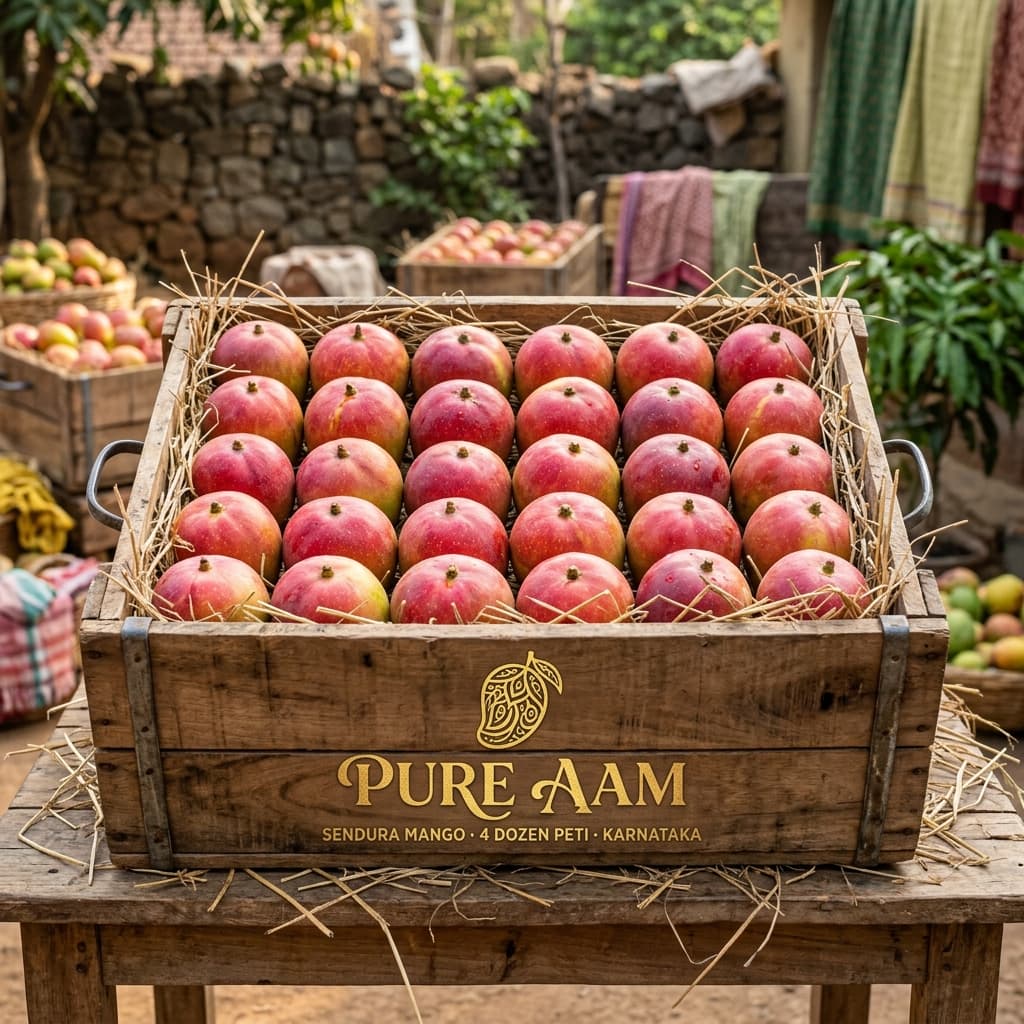 Bulk Value
48 pcs · ~12 kg peti
5% OFFSendura (Honey) Mango 4 Dozen Peti
₹8999₹9499
02
2. The Vermilion Blush: What Makes It Red
The Sendura's most famous feature is its vibrant reddish blush — a colour that ranges from deep vermilion to bright crimson on the sun-exposed surface. This pigmentation is caused by anthocyanins, the same compounds that make pomegranates and red wine red. In the Sendura, these anthocyanins are produced in response to direct sunlight during the final weeks of maturation. The more intense the blush, the more sun-exposed the fruit was on the tree — and the sweeter it will be.
03
3. Why It Is Called the Honey Mango
The nickname 'Honey Mango' is not hyperbole. The Sendura produces a type of sweetness that is qualitatively different from other mangoes — it has a warm, thick, honey-like quality rather than the bright, citrusy sweetness of an Alphonso or the cane-sugar intensity of a Chausa. This character comes from its specific sugar composition: a higher ratio of fructose to sucrose compared to most other varieties. Fructose is perceived as warmer and more viscous on the palate.
04
4. Brix Levels: 16–19° of Pure Honey Sweetness
The Sendura tests at 16–19° Brix — moderate by premium mango standards but deceptive, because the subjective perception of sweetness is significantly higher than the Brix number suggests. This is due to the fructose-dominant sugar profile and the extremely low acidity. The combination of high fructose, low acid, and fiberless flesh creates a 'melt-in-the-mouth' sensation that makes the Sendura taste sweeter than its Brix reading would predict.
05
5. Texture: Fiberless and Melting
The Sendura's flesh is soft, fiberless, and extraordinarily juicy. When you bite into a ripe Sendura, the flesh essentially dissolves — there is no chewing required. This melting texture is the result of high pectin content that breaks down during natural ripening, turning the cell walls into a smooth, jam-like consistency. Chemically ripened Sendura never achieves this texture because the pectin doesn't have time to break down — this is why natural ripening is non-negotiable.
06
6. Season: May to July
The Sendura season runs from May through July, positioning it as a mid-season variety that overlaps with both the Alphonso tail-end and the Neelam beginning. At PureAam, we begin dispatching Sendura from the second week of May. The peak flavour window is June, when the fruit has benefited from the maximum pre-monsoon heat. We harvest only when our farm partners confirm that the skin has developed at least 40% vermilion coverage.
07
7. Nutritional Profile
The Sendura is notably rich in Lycopene — the same antioxidant found in tomatoes — which is responsible for its red pigmentation. Lycopene is a powerful free-radical scavenger associated with cardiovascular health and skin protection from UV damage. The Sendura also provides excellent levels of Vitamin C, Vitamin A, and Potassium. Its high water content (approximately 84%) makes it one of the most hydrating mango varieties.
08
8. Culinary Applications
The Sendura's honey-sweet profile and melting texture make it exceptional for applications where you want the mango to practically dissolve. It makes the smoothest mango milkshake of any variety — no blender required, just mash with a spoon. It is also the preferred variety for South Indian mango ice cream due to its natural honey flavour. For fresh eating, chill the fruit for 2 hours before serving — the cold intensifies the honey notes.
09
9. How to Identify Authentic Sendura
The Sendura is small to medium-sized (200–300g), round to slightly oval, with a pronounced vermilion-red blush covering 30–60% of the skin surface. The non-blushed side is typically yellow-green. The skin is moderately thick, which contributes to its excellent transport durability. Inside, the flesh should be deep golden-yellow. If the pulp is pale or has white streaks near the seed, the fruit was harvested too early or chemically ripened.
010
10. The Value Proposition
The Sendura is one of the most affordable premium mangoes — priced significantly below Alphonso and Kesar but delivering a completely fibre-free, honey-sweet eating experience that rivals both. It is the ideal 'daily eating' mango for families who want premium quality without premium pricing. At PureAam, our Sendura 3kg box is sourced from farms in Karnataka, naturally ripened, and dispatched within 24 hours.
SP
Expert Reviewer
Suresh Patil
Suresh is a 3rd generation Alphonso specialist with 25+ years in the orchards of Ratnagiri. He leads our harvest quality control and traditional hay-ripening protocols to ensure every box meets the Pure Aam standard.