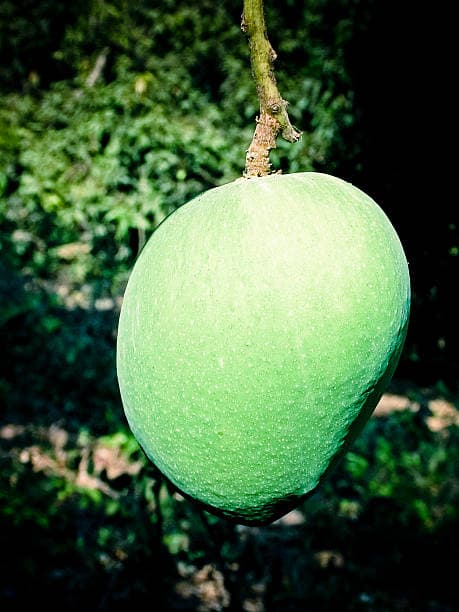
When every other mango has long surrendered to the monsoon, one variety arrives at the very end of summer like a grand finale: the Chausa. Named after the Battle of Chausa (1539) where Sher Shah Suri defeated the Mughal emperor Humayun, this variety carries imperial DNA in every fibre of its being. It is widely regarded as the sweetest commercially available mango in India, testing at 20–24° Brix — levels that rival dessert-grade confections. Golden-skinned, custard-soft, and overwhelmingly fragrant, the Chausa is not just a fruit; it is a statement.
01
1. The Mughal Heritage: Battle of Chausa, 1539
The Chausa mango's name is directly linked to one of the most pivotal battles in Indian history. In 1539, Sher Shah Suri defeated the Mughal emperor Humayun at the Battle of Chausa, fought near the town of Chausa on the banks of the Ganga in modern-day Bihar. According to historical tradition, the victorious Sher Shah celebrated by naming a particularly sweet mango variety after the battle site. Whether the naming is literal or legendary, the association with royalty, power, and celebration has defined the Chausa's identity for nearly 500 years.
Acquire the Harvest
Direct from our Konkan Orchards
Naturally ripened with hay. GI-Certified. Zero carbide. Delivered in 48 hours.
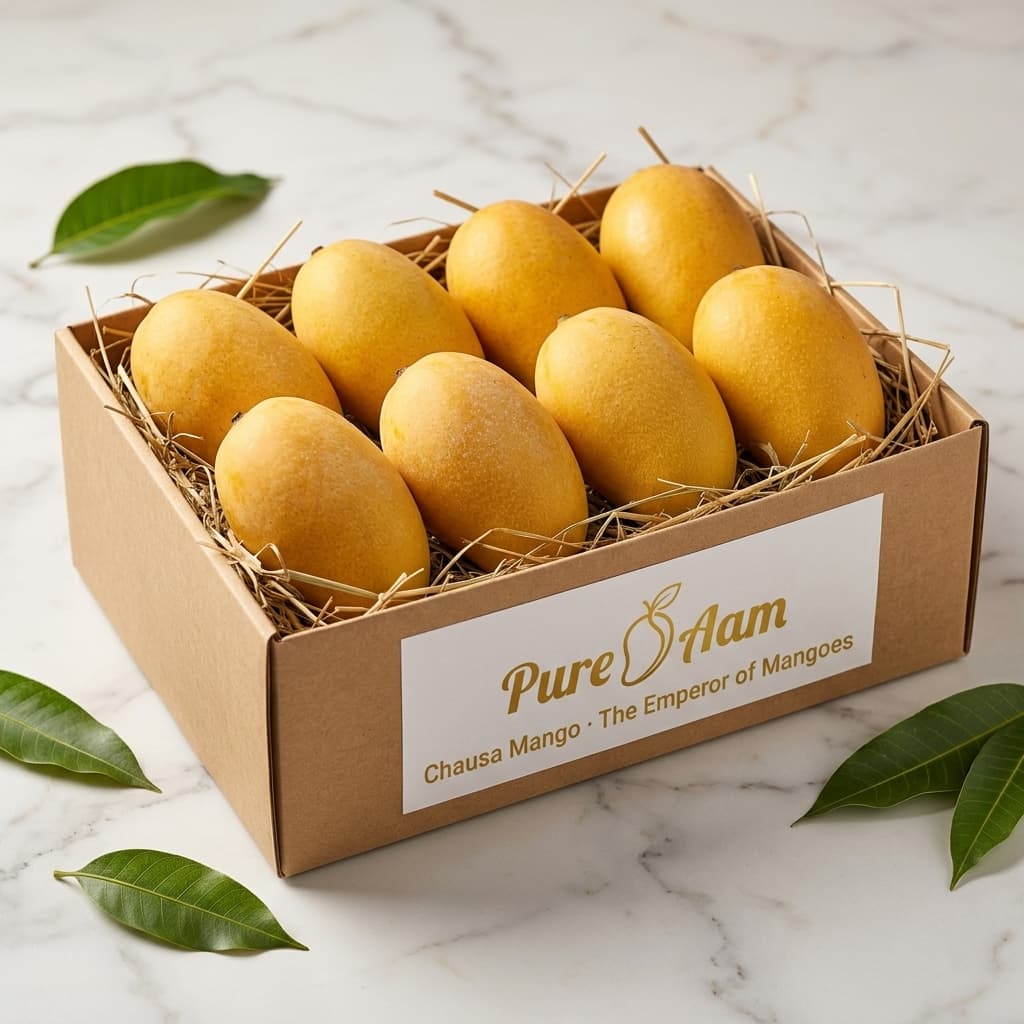 Premium
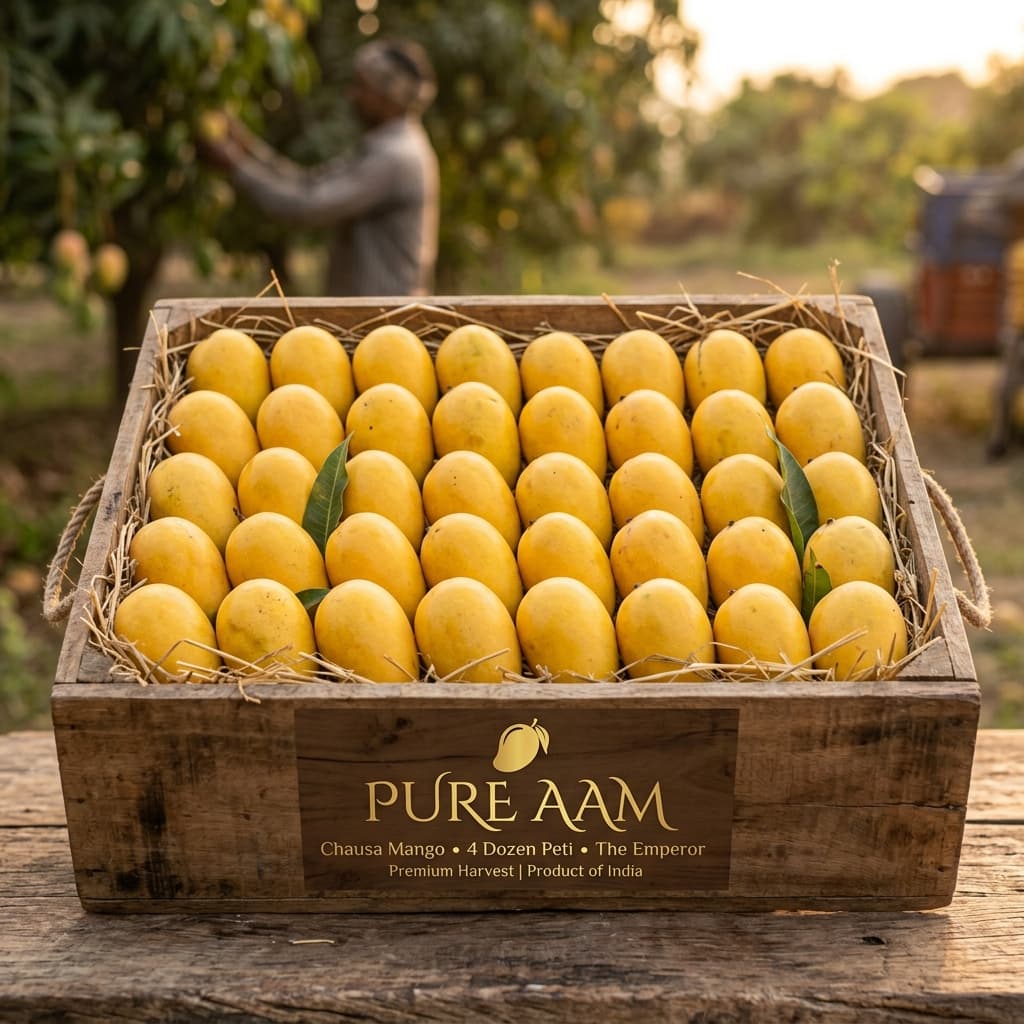 Premium
02
2. The Sweetest Mango in India: 20–24° Brix
The Chausa consistently tests at 20–24° Brix, placing it at the absolute summit of Indian mango sweetness. To put this in perspective: premium grape juice tests at 18–20° Brix, and Coca-Cola tests at 10.6° Brix. A peak-season Chausa is literally twice as sweet as a soft drink. This extraordinary sugar concentration is the result of the variety's late-season timing — by July–August, the trees have had 4+ months of cumulative summer heat, driving sugar synthesis to its biological maximum.
03
3. The Custard-Soft Texture
If you slice a perfectly ripe Chausa and try to pick up a piece, it will collapse. The flesh has the consistency of a thick custard or crème brûlée — soft, yielding, and almost impossible to eat with dignity. This ultra-soft texture is a consequence of extreme pectin breakdown during its extended ripening period. Many Chausa lovers eat it the traditional way: cut the top, insert a spoon, and eat it like a pudding cup. This is not laziness; it is the only practical method.
04
4. The Late-Season Timing
The Chausa is the last major premium mango to arrive each season, with the harvest running from July through September. This means it appears 2–3 months after Alphonso has finished and 1–2 months after Dasheri and Langra have peaked. For the mango lover, the Chausa is the grand finale — the last chance to enjoy a premium mango before the season ends entirely. This scarcity-driven timing significantly contributes to its premium status and pricing.
05
5. The Aroma: Intoxicating and Room-Filling
A box of ripe Chausa will announce itself before you open it. The aroma is overwhelming — a complex blend of honey, tropical flowers, and warm caramel that fills an entire room within minutes. This intensity comes from high concentrations of volatile esters and terpenes that are released as the fruit reaches peak ripeness. The aroma is so strong that experienced mango buyers at UP mandis can identify Chausa boxes from several metres away.
06
6. Varieties of Chausa
There are three main sub-types of Chausa: (1) White Chausa (Mosami Chaunsa) — the most common, with golden-yellow skin and the sweetest flavour; this is the standard premium variety. (2) Black Chausa — slightly darker skin with a more complex, deeper flavour profile; rarer and considered superior by connoisseurs. (3) Nawab Puri — the late-arriving sub-type (August–September) with the highest Brix levels of all, reaching 22–24°. At PureAam, we primarily source White Chausa for its consistent quality.
07
7. Physical Characteristics
The Chausa is a medium-to-large mango, weighing 280–350g. It has an oblong, slightly asymmetric shape with a rounded tip. When ripe, the skin turns a vibrant golden-yellow, sometimes with a slight green tint near the stem. The skin is thin and delicate — handle with care, as it bruises easily. The flesh is a deep saffron-orange, and the seed is proportionally small, giving an outstanding flesh ratio of approximately 70–75%.
08
8. Why Chausa Commands Premium Pricing
Three factors drive Chausa pricing: (1) The extremely narrow harvest window — only 6–8 weeks per year; (2) The fragile skin and custard-soft texture make it difficult to transport without damage, requiring careful single-layer packing and fast logistics; (3) The late-season timing means it competes with almost no other premium variety, creating a natural supply-demand premium. Our Chausa 3kg box is priced at ₹2699, reflecting these realities.
09
9. Storage and Handling
The Chausa is the most delicate mango to handle. Once ripe, it must be consumed within 24–48 hours. Do not stack Chausa on top of each other — the weight will bruise the lower fruits. Store at room temperature until ripe (yields to gentle pressure), then refrigerate immediately and consume within 1 day. Never squeeze a Chausa — the skin will puncture. We pack every fruit individually in our boxes to prevent contact damage during transit.
010
10. Ordering Authentic Chausa
Chausa fraud is common because the variety's high price incentivises sellers to substitute cheaper late-season mangoes. Authentic Chausa should be: golden-yellow, custard-soft, overwhelmingly aromatic, and available only from July onwards. If someone is selling 'Chausa' in May or June, it is not Chausa. At PureAam, our Chausa Premium Box contains 10 hand-selected fruits from North India, and our 4 Dozen Peti contains 48 — both naturally ripened and dispatched within 24 hours.
SP
Expert Reviewer
Suresh Patil
Suresh is a 3rd generation Alphonso specialist with 25+ years in the orchards of Ratnagiri. He leads our harvest quality control and traditional hay-ripening protocols to ensure every box meets the Pure Aam standard.