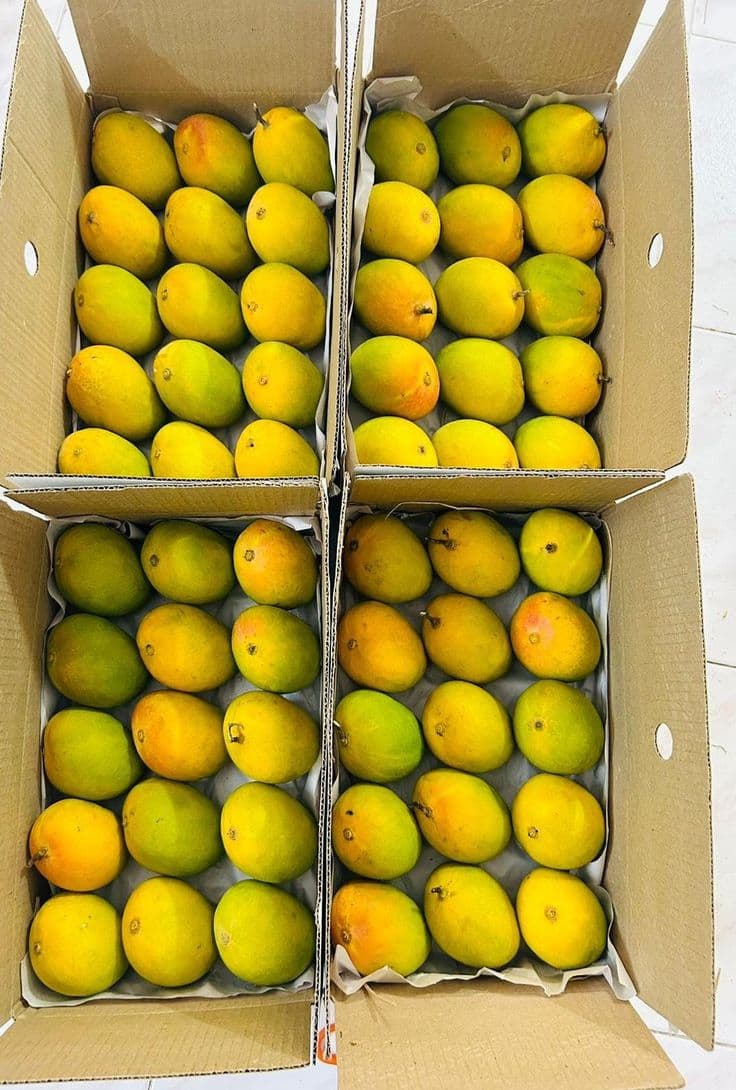
Ask any Bangalorean about the best mango they have ever eaten and the answer is almost always the same: Badami. Called the 'Alphonso of the South' for its fibre-free, creamy texture, the Karnataka Badami has been the dominant premium mango of peninsular India for generations. Yet it remains surprisingly unknown outside its home state. This guide provides the complete picture — from the specific geography of Ramanagara and Kolar that shapes its flavour, to why it is an outstanding value alternative to the Ratnagiri Alphonso.
01
1. Origin: The Mango Belt of Ramanagara
The Karnataka Badami is primarily grown in the red laterite soils of Ramanagara, Kolar, and Chikkaballapur districts in Karnataka. Ramanagara — famously known as the 'Silk City' — sits on rocky granite hills that create well-drained, mineral-rich soil. This geology is the foundation of the Badami's characteristic flavour. The variety's name, 'Badami,' translates to 'almond-shaped' in Kannada, describing its distinctive elongated form.
Acquire the Harvest
Direct from our Konkan Orchards
Naturally ripened with hay. GI-Certified. Zero carbide. Delivered in 48 hours.
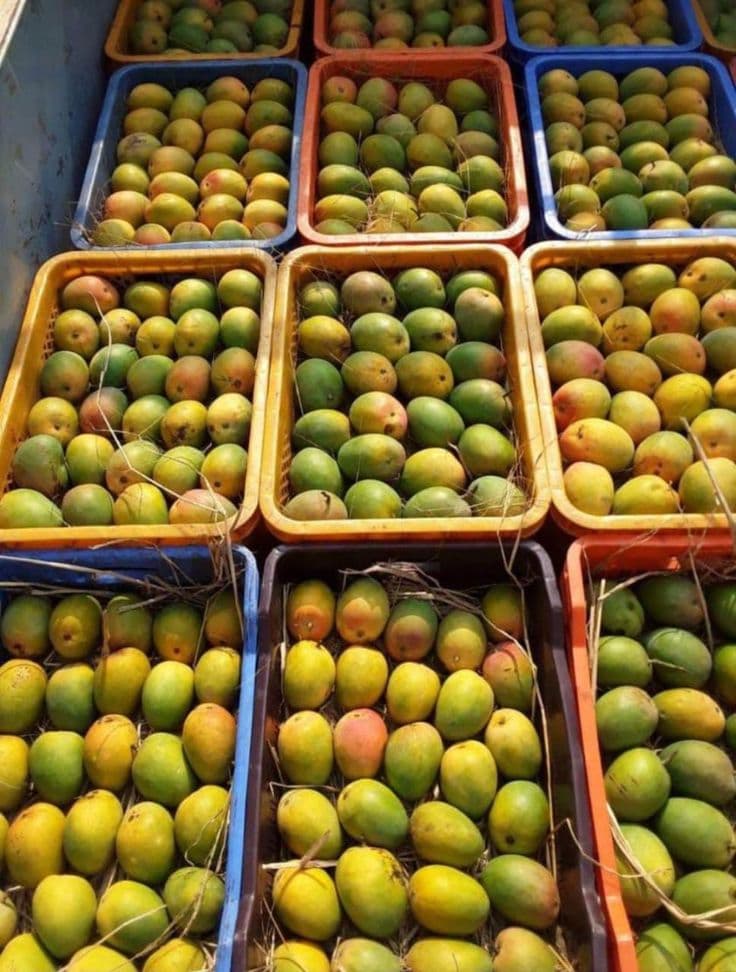 Farm Fresh
02
2. Taste Profile: Sweet with a Refreshing Finish
The Badami has a subtly different sweetness from the Alphonso — slightly less intensely floral, with a cleaner, more refreshing finish. If the Alphonso is a dessert wine, the Badami is a crisp white. The flesh is a vibrant yellow-orange, completely fibre-free, and smooth to the point of being custard-like. The aroma is rich and sweet but lacks the concentrated jasmine notes of the Ratnagiri Alphonso.
03
3. Brix Levels: 18–21° — Premium Tier
A peak-season Badami tests at 18–21° Brix — slightly lower than a Ratnagiri Alphonso (22–26°) but firmly in the premium dessert tier. This moderate sweetness level makes the Badami exceptionally versatile: it is excellent for fresh eating, but also ideal for aamras, mango milkshakes, and kulfi where an overpowering sweetness would be detrimental.
04
4. Season: April to June
The Badami season runs from April through June — overlapping with, but slightly earlier than, the Alphonso season. This means in March and early April, when authentic Alphonso is still rare, Badami is already at its peak. It is the ideal 'season opener' premium mango. At PureAam, we begin Badami dispatches from the second week of April.
05
5. Badami vs Alphonso: An Honest Comparison
The Alphonso wins on aroma intensity, Brix level, and fibre-free texture perfection. It is the more complex, more aromatic fruit. The Badami wins on value (typically 30–40% less expensive than equivalent-grade Alphonso), longer shelf life (4–6 days), and availability (the Karnataka belt produces significantly higher volumes). For daily eating, the Badami is unbeatable value. For gifting or special occasions, the Alphonso is the choice.
06
6. Why Badami Is Called 'Alphonso of the South'
This nickname emerged because Badami shares the single most prized characteristic of the Alphonso: it is completely fibre-free. In South India, where Totapuri and Neelam are the more common commercial varieties (both of which have some fibre), the Badami stands apart. For South Indian mango lovers, Badami was their first introduction to what a truly premium, dessert-quality mango could be.
07
7. How to Identify a Ripe Badami
A ripe Badami is an elongated, slightly flattened oval shape. The skin turns from green to a warm yellow with occasional orange patches. Unlike the Alphonso which develops characteristic 'freckles,' the Badami tends to have a cleaner, more uniform skin colour. The stem should yield a strong, sweet aroma. The touch test: a ripe Badami yields uniformly to gentle pressure with no hard spots.
08
8. The Farming Geography of Karnataka
Karnataka's mango orchards cover over 1.7 lakh hectares, making it the second largest mango-producing state in India. The Badami belt specifically benefits from the rocky, well-drained red laterite soils of the Deccan plateau. Unlike the coastal Konkan where sea mist plays a critical role in Alphonso flavour development, the Badami derives its character from the warm, dry continental climate of interior Karnataka.
09
9. Culinary Uses of Badami Mango
The Badami's moderate sweetness and thick pulp make it outstanding for South Indian preparations. It is the preferred variety for Mangalore-style Mango Rasayana (mango with coconut milk and jaggery), Tamil Mango Pachadi (mango in tempered yogurt), and Bangalore-style chilled mango pulp served with vanilla ice cream. Its firmer texture compared to Alphonso also makes it excellent for mango salads.
010
10. Value Proposition: Why Badami Belongs in Every Order
The Karnataka Badami is the smartest buy of the mango season. You get 95% of the Alphonso experience at 60–70% of the price. For families who want premium quality mangoes regularly throughout April–June without a premium-brand budget, the Badami is the definitive answer. At PureAam, we source exclusively from Ramanagara district farms and guarantee natural ripening with zero carbide.
SP
Expert Reviewer
Suresh Patil
Suresh is a 3rd generation Alphonso specialist with 25+ years in the orchards of Ratnagiri. He leads our harvest quality control and traditional hay-ripening protocols to ensure every box meets the Pure Aam standard.