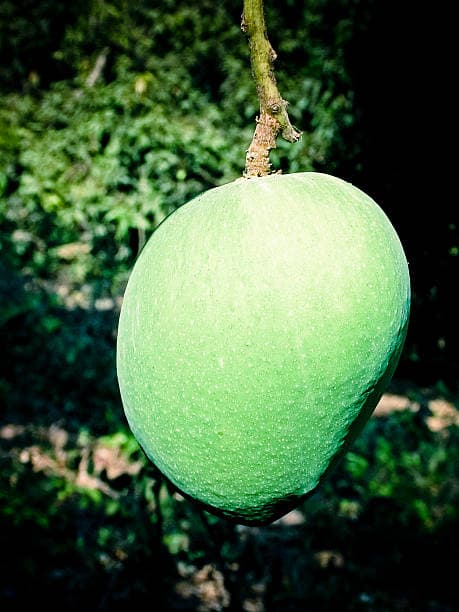
It's the dark secret of the mango industry. To meet the massive demand, many wholesalers use Calcium Carbide (often called 'Masala') to turn green mangoes yellow in 24 hours. This chemical releases acetylene gas, which is toxic and carcinogenic. At PureAam, we use the ancient method of hay-ripening. Here are the 10 ways you can protect your family.
01
1. The 'Water Sink' Test (Most Reliable)
This is the gold standard for home testing. Place your mango in a bucket of water. A naturally ripened Hapus is dense and full of complex sugars; it will sink to the bottom. A chemically ripened mango often has air pockets and uneven starch conversion; it will float. If it floats, do not eat it.
Acquire the Harvest
Direct from our Konkan Orchards
Naturally ripened with hay. GI-Certified. Zero carbide. Delivered in 48 hours.
 Best Seller
 Bulk Value
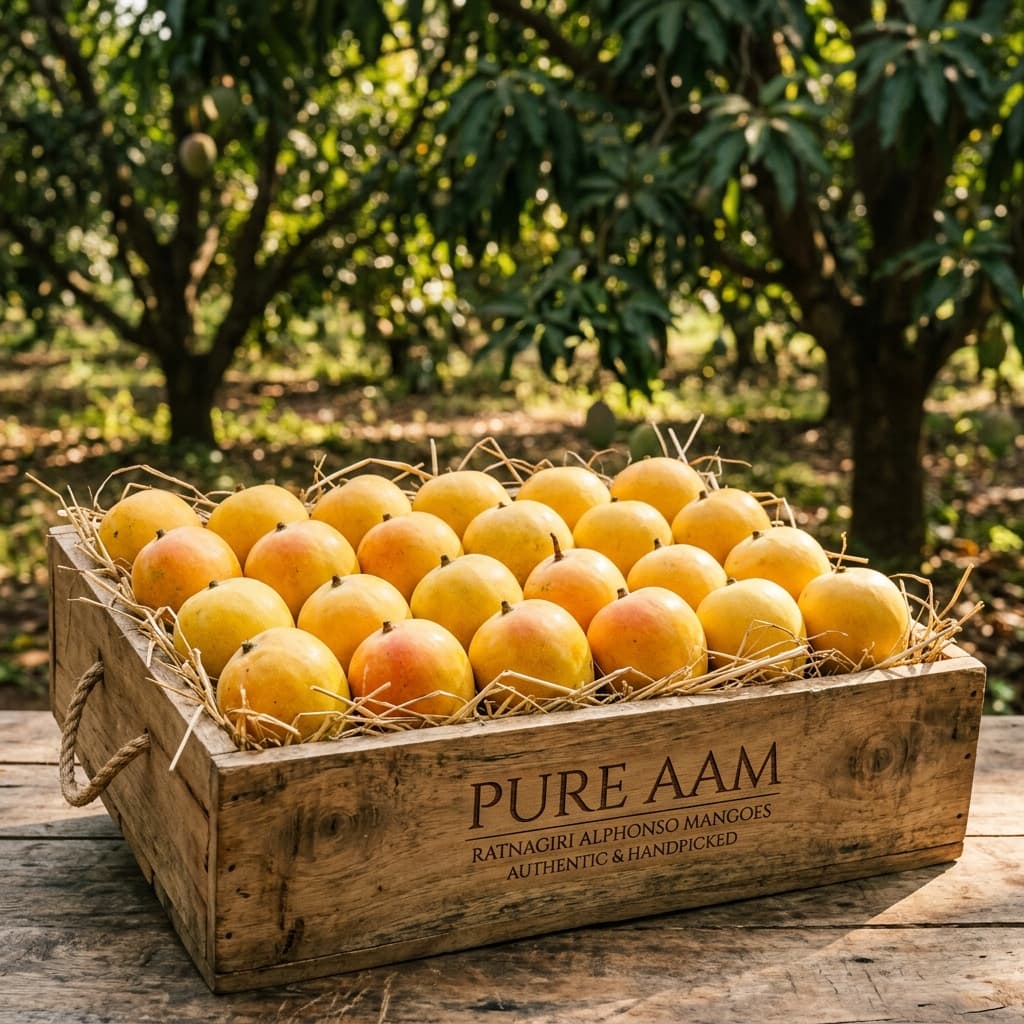
48 pcs · ~12 kg wooden peti
16% OFFRatnagiri Alphonso 4 Dozen Wooden Peti
₹7999₹9499
02
2. Uniform vs. Blotchy Colour
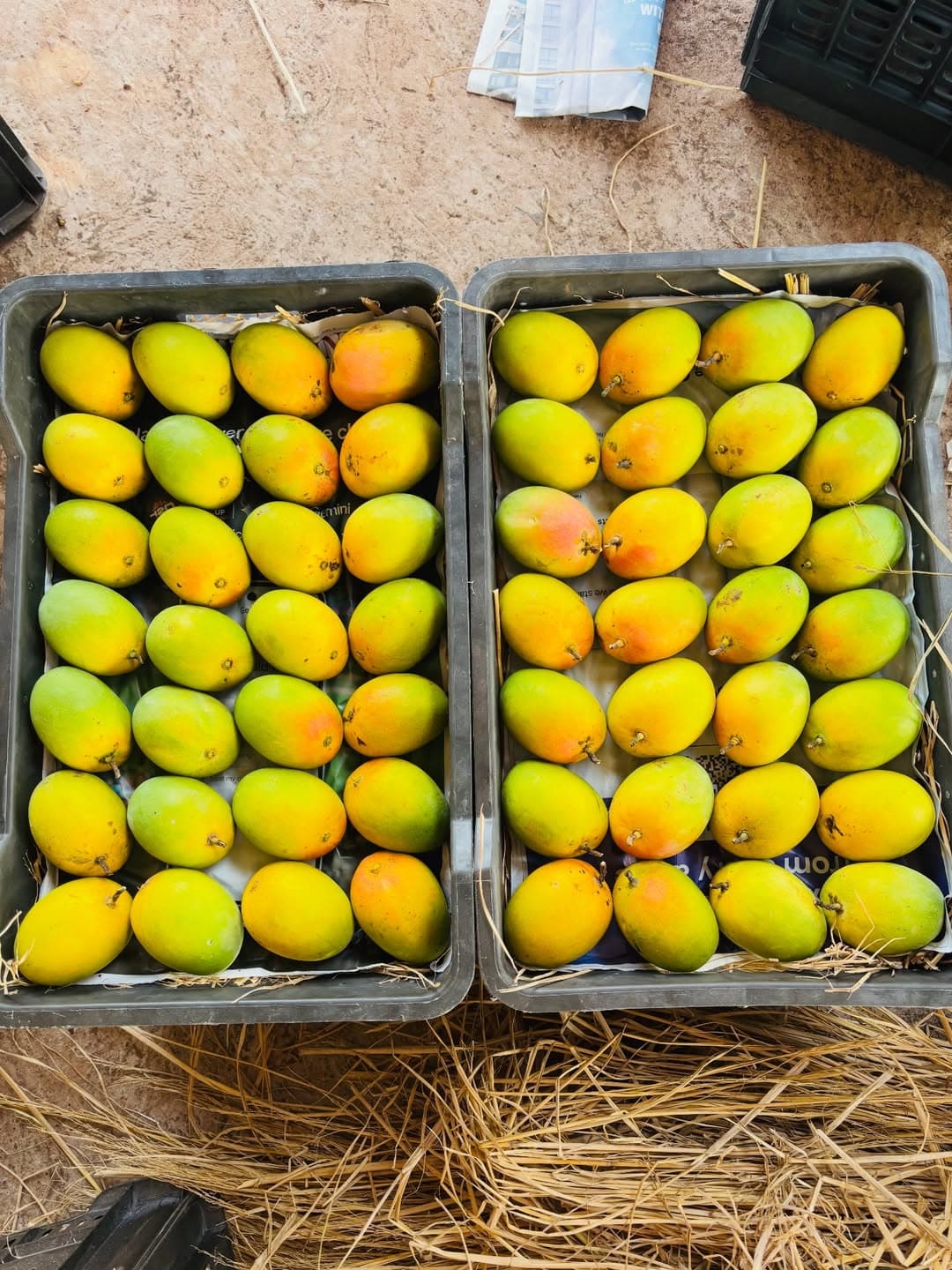
Chemically ripened mangoes have a 'too-perfect' uniform yellow colour. Nature isn't that tidy. A naturally ripened mango will have 'blotches'—green patches near the stem even when the rest is yellow. If every mango in your box looks identical, it was likely gassed in a chamber.
03
3. The Smell of Sulfur vs. Honey
Acetylene gas (from carbide) has a faint smell of garlic or sulfur. A real Hapus should smell like a combination of honey, jasmine, and orange. If you smell nothing, or if there's a chemical 'sharpness' to the scent, it's a carbide fruit.
04
4. The 'Tongue Burn' Test
Chemically ripened mangoes often leave a slight 'burning' or 'tingling' sensation on the tongue. This is due to the residual chemical gas trapped in the pulp. A natural Hapus is smooth, buttery, and has zero metallic aftertaste.
05
5. Skin Texture: Wrinkled is Good
Wholesalers want 'tight' skin because it looks fresh. But a naturally ripening mango loses moisture, causing the skin to develop tiny, beautiful wrinkles. If a mango is yellow but its skin is tight and waxy like plastic, it was forced to change colour before it was ready.
06
6. The Pulp Colour Contrast
Cut the mango open. In a carbide-ripened fruit, the skin is bright yellow but the pulp inside is often pale or light yellow. In a natural Hapus, the pulp is a deep, vibrant 'Saffron' orange from the skin to the seed.
07
7. Softness: The 'Pressure' Test
Gently press the mango. A naturally ripened fruit will be uniformly soft. A chemically ripened one is often soft on the outside (the skin) but has 'hard' patches near the seed. This 'Internal Breakdown' is a classic sign of chemical forcing.
08
8. Juice Consistency
Natural mangoes have a thick, viscous juice. Chemically ripened mangoes have a 'watery' juice because the complex starches never had the time (9-12 days) to convert into thick, silky sugars.
09
9. The 'Stem Leak' Check
Check the stem area. If there is a white, powdery residue, that is Calcium Carbide dust. If the stem area is black and 'burnt' looking, it was likely dipped in an ethrel solution. Natural mangoes have a clean, green or brown stem.
010
10. Seasonal Logic
If you are buying 'Ratnagiri Alphonso' in early February, it is 100% chemically ripened. The season doesn't naturally peak until late March. Nature cannot be rushed without poisons. Always buy according to the natural calendar.
SP
Expert Reviewer
Suresh Patil
Suresh is a 3rd generation Alphonso specialist with 25+ years in the orchards of Ratnagiri. He leads our harvest quality control and traditional hay-ripening protocols to ensure every box meets the Pure Aam standard.