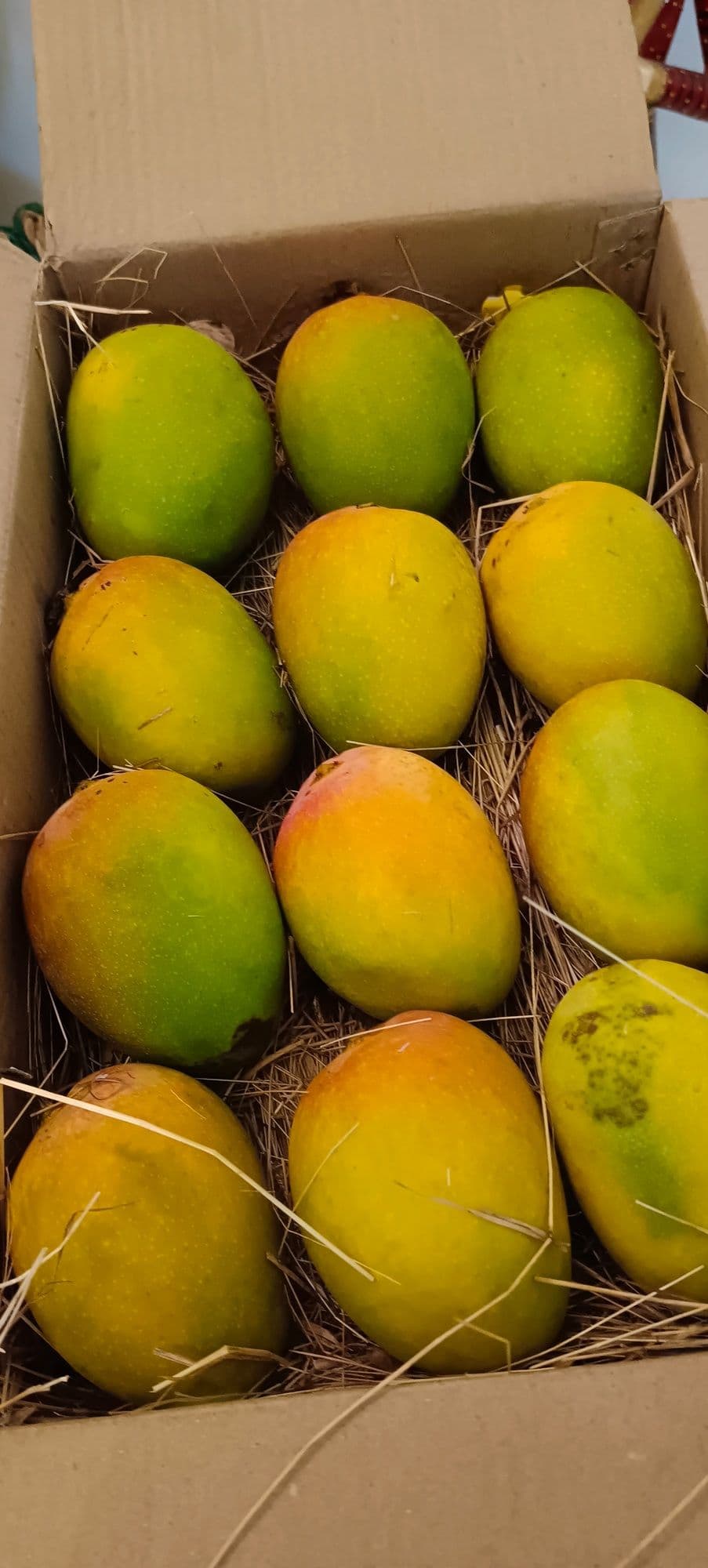
If the Alphonso is the King of Mangoes, the Gir Kesar is undisputedly its Queen. Named after both the saffron (Kesar) hue of its brilliant orange flesh and the legendary Gir forest region of Gujarat, this GI-certified variety is the second most prized mango in India. Yet outside of Gujarat, most Indians have never tasted a truly authentic, farm-fresh Kesar. This guide explains everything — from the specific red soil of Junagadh that creates its flavour, to how to identify a genuine fruit and order it safely online.
01
1. Origin: The Gir Forest Connection
The Gir Kesar mango grows exclusively in the foothills surrounding the Gir National Park in the Junagadh and Amreli districts of Gujarat. The same ecosystem that shelters the last wild Asiatic Lions also produces India's most aromatic mango. The volcanic basalt and calcareous soil of this region — combined with the dry, hot Gujarat summer and the distinct diurnal temperature variation — creates flavour compounds simply not replicable elsewhere.
Acquire the Harvest
Direct from our Konkan Orchards
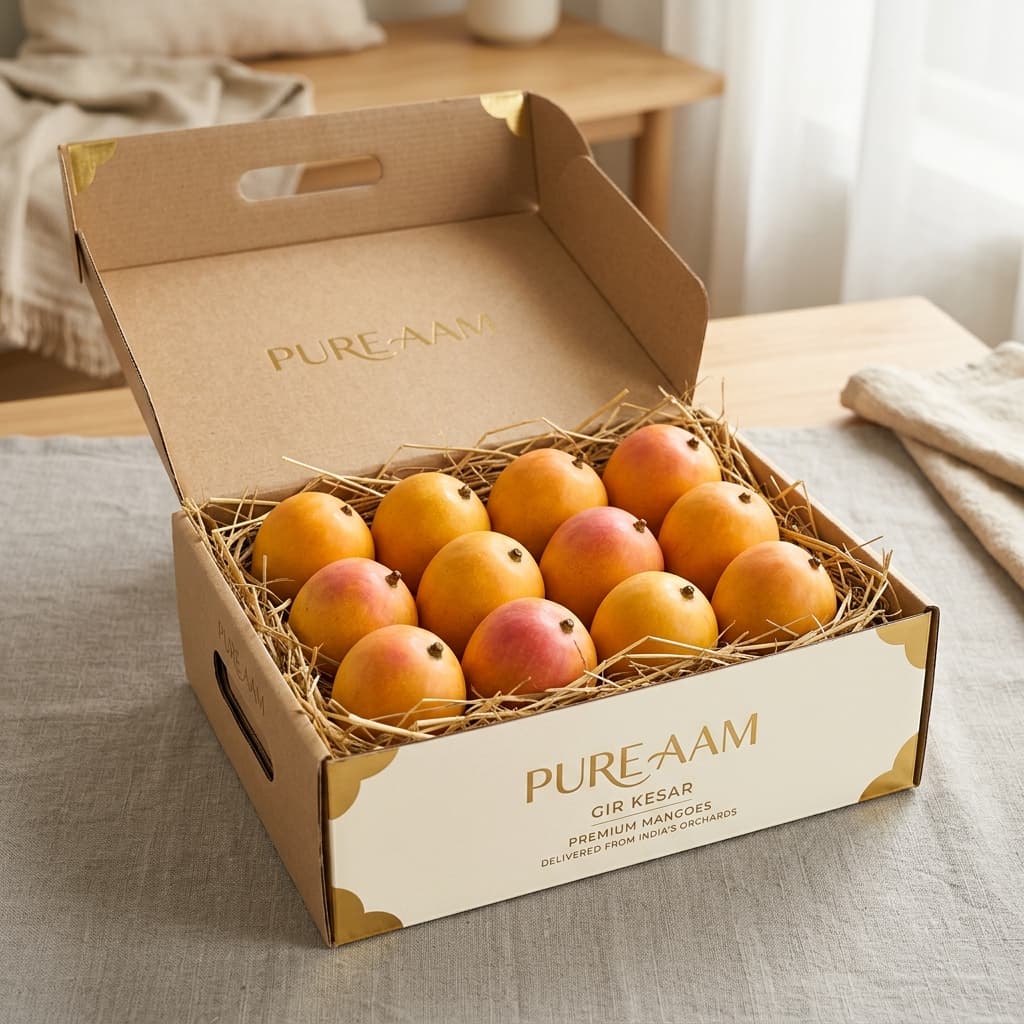
Naturally ripened with hay. GI-Certified. Zero carbide. Delivered in 48 hours.
 Farm Fresh
02
2. The GI Certification Story
Gir Kesar received its Geographical Indication (GI) tag from the Government of India, restricting use of the name to mangoes grown in the specified Girnar region of Gujarat. This tag is the legal guarantee of authenticity. Any 'Kesar' mango sold outside this certification is legally and scientifically a different fruit. When you buy from PureAam, you buy from GI-registered farms in Junagadh and Amreli districts only.
03
3. The Taste and Aroma Profile
Kesar gets its name from its flesh colour — a deep, almost electric saffron-orange that stains the fingers. The aroma is musky-sweet with a distinctive honey-saffron note that is entirely different from the floral jasmine notes of an Alphonso. The flavour is intensely sweet with very low acidity, making it an ideal mango for those who find the Alphonso occasionally too tart. The texture is smooth and moderately fibre-free.
04
4. Brix Levels and Sweetness Science
A peak-season Gir Kesar tests at 18–22° Brix, which places it comfortably in the premium dessert mango tier. The high sugar concentration comes from the intense heat stress the trees experience during the Gujarat summer, which forces the fruit to accumulate sugars as a survival mechanism. This is the same biological process that makes Medjool dates sweet — climate-induced stress equals exceptional flavour.
05
5. Season: When to Order Kesar
The Kesar season runs from May through July — beginning slightly later than the Alphonso season (March–June). This is excellent news for mango lovers: you can transition seamlessly from Alphonso to Kesar and enjoy premium mangoes for nearly five continuous months. At PureAam, we begin dispatching Kesar from the first week of May when the fruit has achieved full tree maturity.
06
6. Kesar vs Alphonso: The Key Differences
The two varieties are frequently compared. Alphonso wins on aroma complexity and fibre-free texture. Kesar wins on sweetness intensity and shelf life (5–7 days vs 3–5 days). Alphonso has a floral jasmine note; Kesar has a musky saffron note. Alphonso flesh is pale saffron-yellow; Kesar flesh is deep saffron-orange. Both are GI certified. Both are extraordinary. The best approach is to order both and decide for yourself.
07
7. How to Identify Authentic Gir Kesar
An authentic Kesar has a round, plump body with a yellow-orange skin (not bright red or green). The skin develops characteristic small brown spots (called 'freckles') as it ripens — this is a sign of natural ripening, not damage. The stem should be dry and clean. The most reliable test: cut it open. If the flesh is deep saffron-orange all the way to the seed and leaves zero stringy fibre on your teeth, it is genuine.
08
8. The Farming Process in Junagadh
Kesar orchards in Junagadh are typically small, family-run farms averaging 2–5 acres. The trees require minimal irrigation due to the area's natural rainfall pattern but need careful management during the critical flowering stage in December–January. Farmers tie the flower clusters (called 'mohar') with cloth to protect them from unseasonal rain. Each tree is hand-pruned annually to maximise sunlight exposure and airflow.
09
9. Nutritional Profile of Kesar Mango
Kesar is exceptionally rich in Beta-Carotene — the compound that gives it its deep orange colour and is converted by the body into Vitamin A. A single Kesar mango provides approximately 20–25% of your daily Vitamin A requirement. It is also high in Vitamin C, Potassium, and Mangiferin — the powerful anti-inflammatory polyphenol found in high concentrations across all premium Indian mango varieties.
010
10. How to Order Authentic Kesar Online Safely
When ordering Kesar online, always check for: (1) GI registration mention from the Girnar/Junagadh region; (2) Natural ripening guarantee (no ethrel or carbide); (3) Dispatch from Gujarat — not from Mumbai or Delhi cold storage; (4) Clear harvest dates. PureAam ships Kesar directly from our partner farms in Junagadh within 24 hours of harvest, ensuring you receive the fruit at Day 2 of ripeness — perfect for eating over 5–7 days.
SP
Expert Reviewer
Suresh Patil
Suresh is a 3rd generation Alphonso specialist with 25+ years in the orchards of Ratnagiri. He leads our harvest quality control and traditional hay-ripening protocols to ensure every box meets the Pure Aam standard.