In the mango aristocracy of India, the Dasheri holds a unique position: it is both the most consumed premium mango in North India and the one with the most romantic origin story. Named after the village of Dasheri near Kakori in Lucknow, this variety emerged in the 18th century gardens of the Nawabs and has since become the defining taste of North Indian summers. Its nectar-like sweetness, completely fiberless flesh, and intensely aromatic profile make it the undisputed king north of the Vindhyas. This is its complete story.
01
1. The 18th Century Origin in Lucknow
The Dasheri mango traces its origin to a single tree in the village of Dasheri near Kakori, in the Lucknow district of Uttar Pradesh. Historical accounts suggest this 'mother tree' was cultivated in the 18th century during the era of the Nawabs of Awadh, who were legendary patrons of horticulture and cuisine. Every Dasheri tree in India today is a descendant — through grafting — of this original tree. The mother tree reportedly still stands in Dasheri village, maintained as a heritage specimen.
Acquire the Harvest
Direct from our Konkan Orchards
Naturally ripened with hay. GI-Certified. Zero carbide. Delivered in 48 hours.
 Farm Fresh
 Bulk Value
02
2. Malihabad: The World's Dasheri Capital
The town of Malihabad, about 30 km from Lucknow, is the world's single largest Dasheri-producing region. It is home to over 30,000 hectares of Dasheri orchards and produces approximately 50,000 tonnes of fruit annually. The alluvial soil of the Ganga-Yamuna doab, the extreme Uttar Pradesh summer (temperatures regularly exceeding 45°C), and the specific rainfall patterns create a terroir that is uniquely suited to Dasheri. Our mangoes come from this very belt.
03
3. The 'Nectar' Sweetness Profile
The Dasheri is frequently described as having a 'nectar-like' sweetness — and this is not exaggeration. The flavour profile is dominated by sucrose with clean, bright citrus undertones and a subtle floral background note. There is virtually no astringency or tanginess. The sweetness is pure, clear, and intense — like drinking floral honey diluted with mango juice. This flavour purity is what makes the Dasheri instantly recognisable even in a blind tasting.
04
4. Brix Levels: 14–18° with Maximum Perceived Sweetness
At 14–18° Brix, the Dasheri registers lower than Alphonso on paper. But perceived sweetness is not just about sugar content — it is about sugar type, acidity balance, and aroma. The Dasheri has extremely low acidity (below 0.3%), which means there is nothing to mask or counterbalance the sweetness. Combined with its intense aroma, the Dasheri tastes sweeter than many varieties with higher Brix readings. This is the 'nectar effect.'
05
5. Physical Characteristics
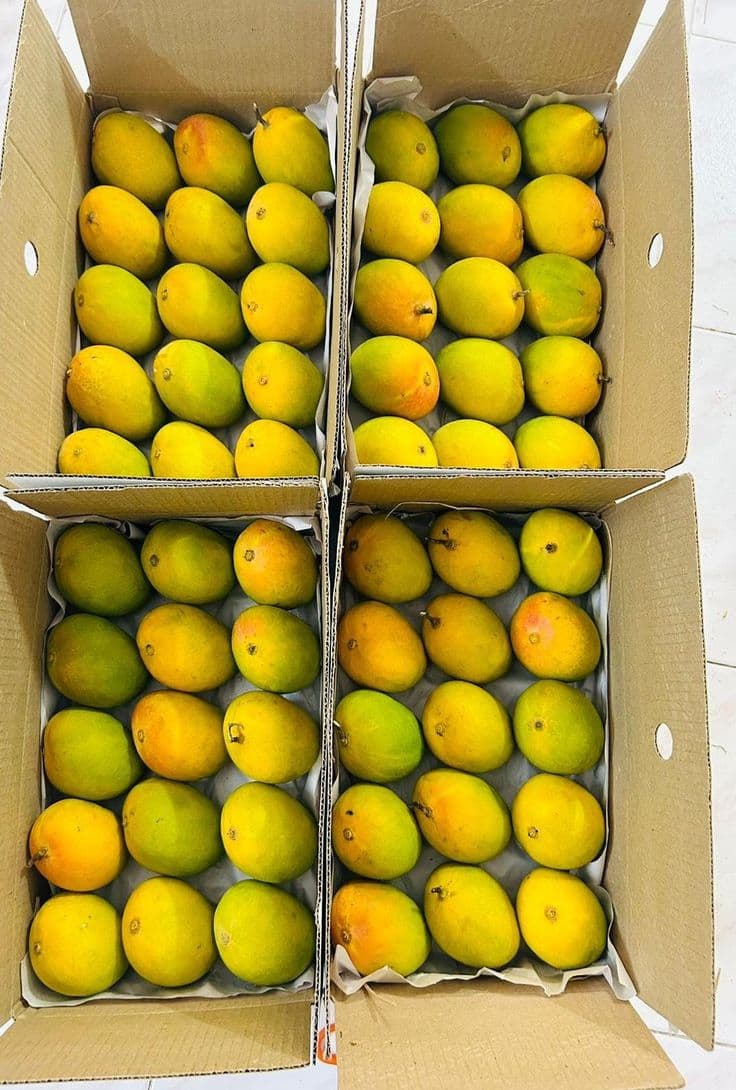
The Dasheri is a small-to-medium mango (200–280g), elongated and oval with a characteristic curved, blunt tip. When ripe, the skin transitions from green to a light yellow-green. Unlike the Alphonso which turns fully golden, the Dasheri retains a subtle green tint even at full maturity — this is normal and not a sign of under-ripeness. The flesh is vibrant yellow-orange, completely fibreless, and extraordinarily smooth.
06
6. The Season: May to July
The Dasheri season in Uttar Pradesh runs from late May through July. The first arrivals in May are from early-harvested orchards and tend to be slightly less sweet. The peak season is June, when the full summer heat has driven sugar accumulation to its maximum. At PureAam, we begin dispatching Dasheri from the first week of June to ensure every box arrives at peak maturity.
07
7. Dasheri vs Alphonso: The Great Debate
This is the eternal North vs South mango debate. Alphonso wins on aroma complexity, fibre-free texture perfection, and international recognition. Dasheri wins on sweetness purity, accessibility, and what North Indians call 'raseelapan' — the juicy, nectar-drenched quality that makes you want to eat five in a sitting. Alphonso is a refined dessert experience; Dasheri is an indulgent, intoxicating feast. Both are extraordinary; the preference is deeply regional.
08
8. Traditional Consumption: The Lucknow Way
In Lucknow, Dasheri is not sliced. It is eaten in the traditional 'guthli choos' method: you gently massage the ripe mango between your palms to loosen the pulp from the skin, bite off the tip, and suck the nectar directly from the fruit. This method preserves the aroma volatiles that are lost when you slice the fruit and expose it to air. The 'guthli choos' technique is a Lucknow cultural ritual as much as a culinary preference.
09
9. The Heritage Orchard Crisis
Malihabad's historic orchards face growing pressure from urbanisation, with land prices rising and younger generations moving to cities. Many heritage orchards — some containing trees over 100 years old — have been sold for real estate development. When you buy authentic Malihabad Dasheri, you are directly supporting the economic viability of these traditional orchards. Every box sold is a vote for preservation over demolition.
010
10. Ordering Authentic Dasheri
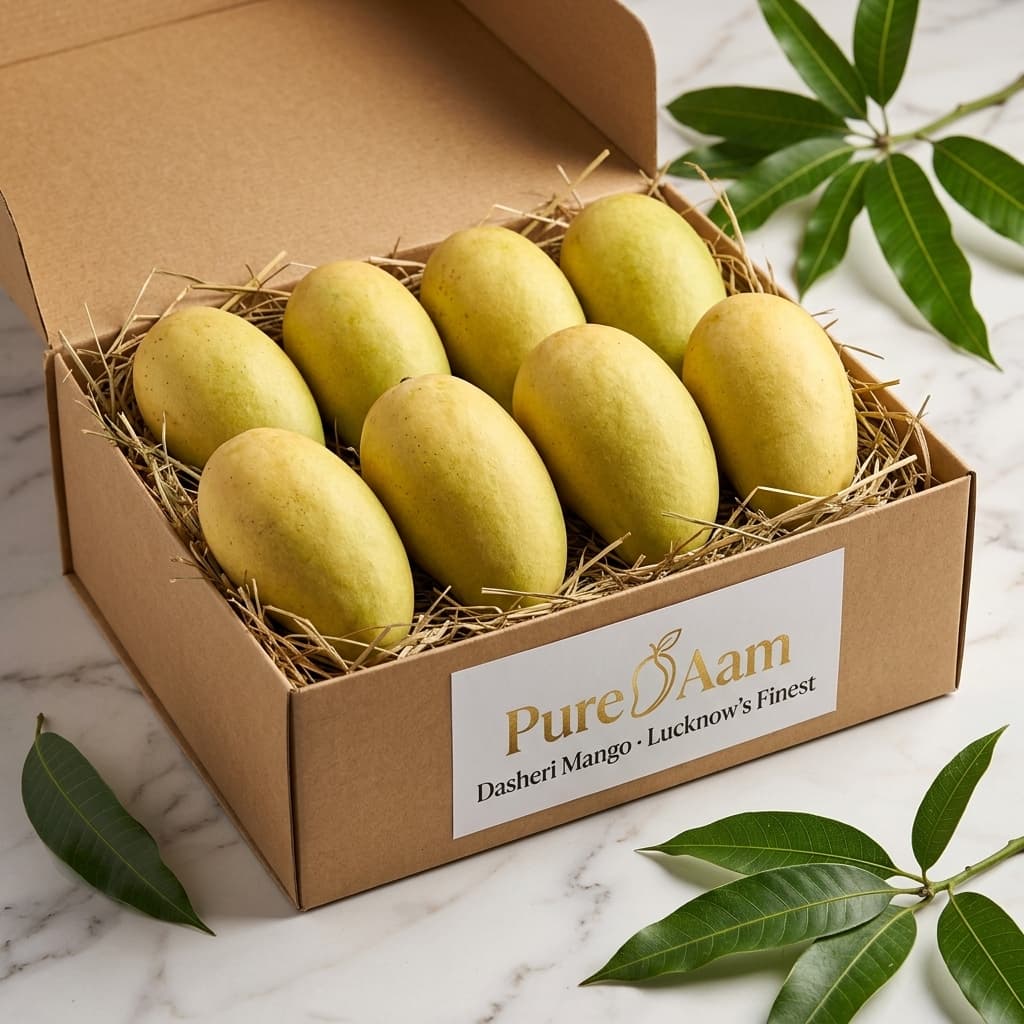
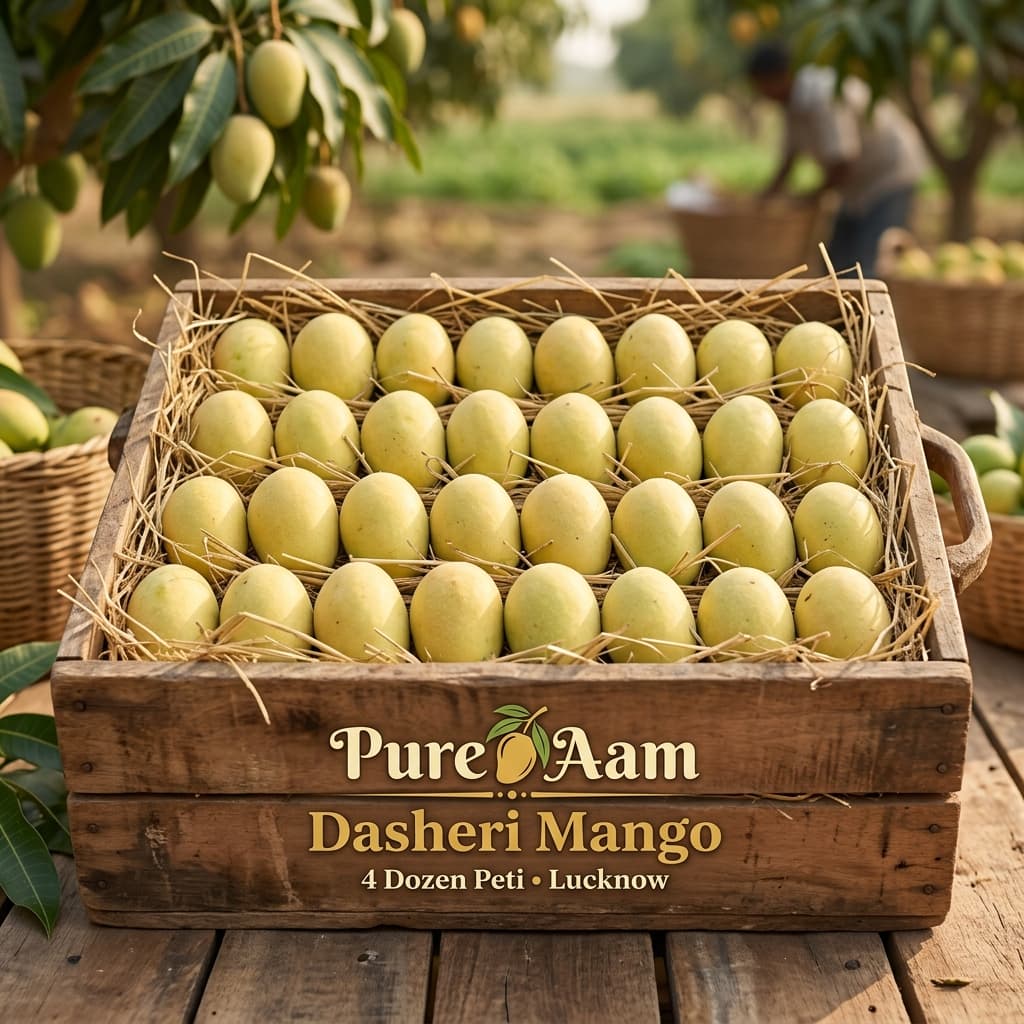
The most common fraud in the Dasheri market is selling Safeda or Langra mangoes as Dasheri. Always verify: Dasheri is elongated with a curved tip, light yellow-green skin, and a nectar-sweet flavour with zero tanginess. At PureAam, our Dasheri Premium Box contains 12 hand-selected fruits from Malihabad, and our 4 Dozen Peti contains 48 fruits — both naturally ripened and dispatched within 24 hours of your order.
SP
Expert Reviewer
Suresh Patil
Suresh is a 3rd generation Alphonso specialist with 25+ years in the orchards of Ratnagiri. He leads our harvest quality control and traditional hay-ripening protocols to ensure every box meets the Pure Aam standard.